

Effective Rat Control in London
Amateur use of poison and traditional mouse traps is no longer the most effective, nor the safest form of rat control. They take more effort to continuously check, can pose a threat to children and pets, and poisoned carcasses can begin to rot in unreachable locations. Once you’ve experienced the smell of a rotting rat carcass you’ll know that it is something to be avoided at all costs, especially as most of the time the rodent will have scurried away to an impossible place to reach to expire, meaning you have to put up with a lingering, highly unpleasant smell for weeks. Difficult to stomach in your own home, this could be a commercial nightmare in a shop or food outlet where customers would be justifiably put off.
The guaranteed method of rat control is to enlist the professional services of a pest control expert, like us. Our solutions are not only proven to be effective, but they are also safe and carried out to the highest professional standard. We also offer advice when it comes to other measures of rat control, such as how to best rat-proof your property; domestic or commercial.
By securing structures and preventing possible rodent intruders, you can avoid the need to deal with an entire population. It should also be noted that rat-proofing reduces the risk of re-infestation, as long as proper practices are employed.
Expert Rat Control in London
A common occurrence in urban centres like London, brown rat infestations are a serious problem. Not only do these pest infestations have a negative effect on your quality of life, but they also pose a risk to your health, due to the infectious diseases that rats carry. This is why rat control or rat extermination services in London are such a vital and essential business to know about if you ever need such a service. They can have a damaging effect on the city’s infrastructure, causing anything from a power cut to a closed business.
In domestic settings, rats can make it unpleasant to be at home, wondering what food and surfaces have been contaminated, or whether you and your family are safe. In commercial circles, they can cause significant structural damage and financial loss.
Food premises suffering a rat infestation of any size will need to address the problem as a matter of urgency, not only to protect their staff and customers, but also in the interest of minimising the impact on the business. Empire’s rat control and rat exterminator services covering all of London are particularly ideal for commercial clients.
In London’s commercial properties, high-risk spots for rat infestations include production areas, boiler rooms and false roofs, or similar spaces. It is these areas that should be monitored, and, if you suspect a rat infestation in one of these spots or nearby, you should contact a professional pest control specialist.
It is possible to use tamper-proof bait stations and non-toxic indicator blocks in such areas, but to ensure you take the correct measures, in a safe and effective manner, get in touch with Empire and let our experts investigate your rat infestation and advise you accordingly. Our assessments include detailed reports of the site, bait plans, monitoring reports and COSHH reviews, as well as recommendations for hygiene, housekeeping and rat-proofing.
Rats in London
Whether you have a rat population in your London home or on your business premises or are even just being cautious so as to avoid an infestation altogether, knowing how to spot a rat and the signs of an infestation is essential. Not only will this help you to know what you are dealing with, but it will give you the knowledge you need to identify problems early and get them treated as soon as possible.
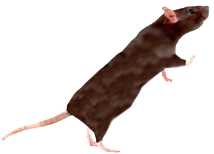
Rats vary in colour, but they usually have brown or grey fur, with a light underside. Their tail, which is only slightly shorter than the length of their head and body, is also two-toned, with a dark upper and light lower side.
Whilst their eyes and ears are small, their teeth grow by up to 12mm every year, and their keen sense of taste makes them a talented pest when it comes to identifying foods and unusual compounds, such as poisons, even in low amounts.
As omnivorous pests, rats enjoy starch and protein if given the choice, but they will eat vegetables, fish, meat, weeds, crustaceans, earthworms, nuts and fruits, as well as cereals. This means any unsealed (and in some cases, even sealed) food is at risk of contamination if you have a rat population nearby.
With litters between eight and ten in size, and up to six litters a year, populations can grow fast. Their average lifespan is about a year to a year and a half, and they reach maturity within three months, which only fuels reproduction rates. As such, it is essential to spot and deal with a rat infestation as quickly as possible.
There are several indicators of a rat infestation, including holes, gnaw marks, tracks, urine trails, fresh droppings, tail smear marks, damaged items and even nests. Rodent urine will show up with UV light while most other marks and signs will be visible to the naked eye. You may also hear noises in the walls if your pest population have found their home there.
The Rat
Rattus norvegicus
The quick detection guide below will help you to determine if you have these unwanted guests in your home or business premises.
- Droppings – dark brown in colour and shaped like a grain of rice.
- Tracks – due to their poor eyesight but good sense of smell rats tend to follow the same route to and from their nests and they leave dirty and greasy rub marks behind.
- Chewed items – they use shredded soft items to make their nests so shredded paper, cardboard and material debris could indicate an infestation.
- Teeth marks and holes –well known for chewing through anything from wood to electrical wire, if you find something that looks like it’s been chewed then you are likely to have rats nearby.
- Smell – rats themselves are quite clean animals but the urine they leave can cause a build-up of odour if not cleaned up. This has often been described as smelling of ammonia.
So get in touch with Empire to find out more about rat control services in London, or to arrange for one of our experts to investigate a suspected infestation in your property.
