

Pigeon Control In London
London’s pigeon population is part and parcel of life in the city, but despite being more conspicuous than their rodent and insect counterparts, pigeons are still pests, capable of causing all sorts of problems for those working and in urban centres.
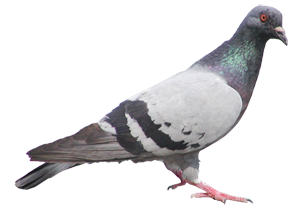
The feral pigeon is a descendant of the coastal Rock Dove, and over time, it has abandoned its coastal habitat for more convenient locations, where human populations ensure safe places to nest and a constant source of food.
Far from being friendly urban wildlife for tourists to enjoy feeding scraps too, pigeons are actually a nuisance for many different reasons. As well as pestering people for scraps, they are noisy and can gather in large numbers on the street. They also damage masonry and metal work by fouling or, on a structural level, by nesting. And last but not least, they pose a threat to human and animal health because of the diseases and parasites they carry.
If you have a pigeon problem at home, you may find your quality of life is negatively impacted, whilst a pigeon problem at a commercial premise can lead to loss, or even closure, of business. As such, it is vital that you invest in professional services like ours, to exercise pigeon control methods and reduce the population.
About Pigeons
When looking for signs of a pigeon infestation, you needn’t look in trees or outdoors like you would for, say, a Wood Pigeon. Feral pigeons nest almost exclusively in buildings, especially those with a height advantage, meaning pigeons like the high rises of cities like London for their ideal nesting ground. However, their nests are still made predominantly from grass and twigs, as well as rubbish they can scavenge.
In terms of how quickly and easily a feral pigeon population can spread, it is worth noting that they will breed throughout the year even though the peak season is March to July. Clutches tend to have two eggs, which are incubated for around 19 days before hatching to reveal fledglings. It then takes a little over a month before the mother can lay her next lot of eggs. As such, you can expect up to nine pigeon broods a year, meaning an infestation can expand at quite a rate.
This, in turn, exacerbates the problems already associated with the feral pigeon population. London’s buildings and monuments fouled on by pigeons is a common issue as they tend to be where nests are found. However, the acidic makeup of the droppings means any stone or metalwork can undergo chemical reactions and erosion while the droppings themselves can become infested with mite and insect populations.
Some of the diseases these organisms carry include:
- Chlamydiosis
- Cryptococcosis
- Campylobacter
- Salmonellosis
- Erysipelas
- Extrinsic Allergic Alveolitis (Pigeon Fancier’s Lung)
- Histoplasmosis
- Psittacosis
Whilst birds, their nests and their droppings can also lead to:
- Varied Carpet Beetle
- Fur Beetle
- Larder Beetle
- Yellow Mealworm Beetle
- Biscuit Beetle
- Spider Beetles
- Case-bearing Clothes Moth
- Brown House Moth
- White Shouldered House Moth
- Lesser House Fly
- Blowflies
- Cheese Mite
- Flour Mite
- Common Bird Mite
- Pigeon Tick etc
Further issues caused by a resident pigeon population include water damage, as a result of blocked guttering and downpipes, blocked chimneys and subsequent smoke issues or gas (CO/Carbon Monoxide) blockages, and unpleasant odours or noise complaints. In addition, pigeon nests and excrement generally increase the need for and cost of maintenance.
Solving Your Pigeon Problem
Whilst there are several different methods when it comes to pigeon control, the most effective way to handle feral pigeon infestation is to enlist the help of professional pest control services. Empire Pest Control can use a combination of different products and techniques to provide a reliable solution to your pigeon problem. We can also help to ensure exclusion methods, like netting and flock dispersal, are effective; something you can’t guarantee without the right expertise.
Empire Pest Control provide pigeon control services for London and all surrounding areas. Check here to see if we operate in your postcode area.
Get in touch today and talk to us about your pigeon problems, and how we can help.

